Newsletter Subscribe
Enter your email address below and subscribe to our newsletter

 ByJohn A
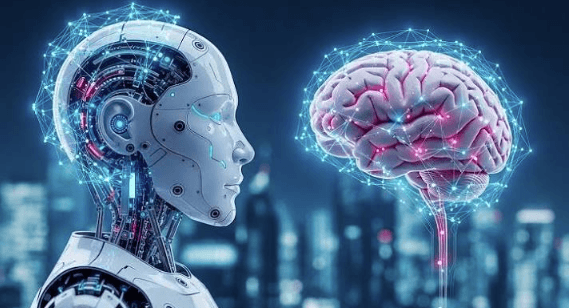
The question asks whether AI can surpass human intelligence. AI excels at speed, scale, and pattern recognition, often outperforming people in specialized tasks. Yet genuine intelligence involves judgment, context, and values—areas where machines struggle. Progress may reshape capability without a wholesale takeover. If systems improve under clear rules and oversight, collaboration—humans guiding norms, machines handling narrow reasoning—could redefine intellect. The balance invites scrutiny: what counts as being smarter, and who decides the standard?
Outsmarting humans would mean surpassing human capabilities in one or more domains that currently anchor decision-making, problem-solving, and learning.
The notion prompts scrutiny: does superior processing equate to autonomy, or merely speed?
This view emphasizes strategic reasoning, where machines might optimize choices within defined norms.
Critics warn against conflating output quality with understanding, urging vigilance toward unintended consequences and preserved human agency.
While the previous discussion explored what it would mean for machines to outpace human decision-making, the focus now turns to how AI advances actually compare with human intelligence. Assessments emphasize varied benchmarks: pattern recognition, learning speed, and adaptability. Skepticism remains about translating machine autonomy into genuine cognition, while human cognition reserves context and nuance that current systems cannot replicate or sustain.
The prospect of smarter AI prompts cautious scrutiny of limits, risks, and ethical considerations: as capabilities advance, questions arise about control, accountability, and unintended consequences.
The discourse remains precise and skeptical, acknowledging fear ethics without surrendering autonomy.
Safeguards demand robust safety governance, transparent decision processes, and restraint in deployment.
Critics urge vigilance to prevent opaque incentives, misaligned objectives, and erosions of human agency under smarter machines.
See also: Bias in Artificial Intelligence: Causes and Solutions
What changes might a society undergo when intelligence—artificial or otherwise—reaches levels that rival or exceed human capacities?
The discussion examines AI governance, ethical design, and transparency and accountability as structural guardrails.
It weighs societal resilience, workforce adaptation, and human AI collaboration, while safeguarding data privacy and bias mitigation.
The stance remains skeptical, stressing measured progress, freedom-enhancing models, and responsible, verifiable implementation.
AI cannot truly understand human emotions; it simulates responses. The assessment hinges on emotional literacy, yet empathy gaps remain evident. The detached observer notes potential utility and risks, urging skeptical, freedom-minded evaluation of artificial affective claims.
Satire aside, AI progress may notch advances yet likely won’t surpass general reasoning across all domains. Skeptically, observers note AI bias and false beliefs persist—intelligence advances, but true, universal reasoning remains uncertain and freedom-loving scrutiny remains essential.
AI systems can develop false beliefs through biased data, misleading objectives, and distribution shifts; bias emergence and model misalignment may embed unintended conclusions. A detached observer notes caution: such phenomena demand rigorous evaluation, transparency, and guardrails for freedom-conscious design.
AI cannot truly create conscious experiences or self-awareness; it simulates awareness without subjective sensation. It may model human emotions and empathy, but lacks intrinsic conscious experience, raising questions about freedom, responsibility, and the limits of engineered self-understanding.
AI’s impact may include erosion creativity and originality erosion, but the claim remains uncertain; observers remain skeptical that machines inherently supplant human ingenuity, instead noting adaptive tools that potentially reshape processes without guaranteeing a loss of autonomy or freedom.
A careful read of current trends suggests the theory that AI will simply outpace human intelligence in all domains is misleading. AI excels at speed, scale, and pattern recognition, yet lacks common sense, genuine understanding, and ethical judgment. The plausible future envisions intensified collaboration: machines handling specific gaps while humans provide context, values, and adaptive creativity. The truth likely lies in augmented intelligence rather than wholesale supremacy, demanding deliberate guardrails, accountability, and thoughtful integration into society.